

Definition
La renta imputada is a theoretical income imposed by theAgencia Tributariathe Spanish tax authority, on non-resident owners of unlet or occasionally let property in Spain. This income is based on a flat-rate calculation of the property's cadastral value.
Renta imputada was created because, even in the absence of rental income, the State considers that the property generates an economic benefit for its owner.
As a reminder, non-residents are people who spend less than 183 days a year in Spain, and who have neither their economic nor family center of interest there.
Who is affected by renta imputada?
Renta imputada applies to non-resident owners whose property is not rented out or is rented out only occasionally.
How is renta imputada calculated?
What is the renta imputada calculation based on?
The notional income is calculated on the basis of the cadastral value(el valor catastral) of the home.
The cadastral value is indicated on theIBI (local property tax).
Two different percentages can be used in the calculation:
- 1.1% if the cadastral value has been revised in the last 10 years.
- 2% if the cadastral value has not been revised.
What is the tax rate?
The tax rate applied depends on the taxpayer's tax residence.
- 19% for residents of the European Union or the European Economic Area
- 24% for non-EU or EEA residents (and therefore UK residents since Brexit came into effect) link the brexit article once published
Concrete example
Unleased property
- A non-resident British citizen owns an unlet apartment with a cadastral value of €100,000.
- The value has not been revised for over 10 years.
Renta imputada: 100,000 x 2% = €2,000
Tax due = 2,000 x 24% = €480
Occasional rentals
In the case of partial rental, the renta imputada applies only to periods when the property is not rented.
- The tax base (cadastral value x 1.1% or 2%) is prorated to the number of days or months the property is vacant.
- During rental periods, the actual rental income is taxed.
Practical information: when and how to declare renta imputada?
- You will need to useAgencia Tributaria 's modelo 210 to declare your non-resident income (IRNR).
- File your declaration each year before December 31 for the previous year.
- Pay by bank transfer or direct debit.
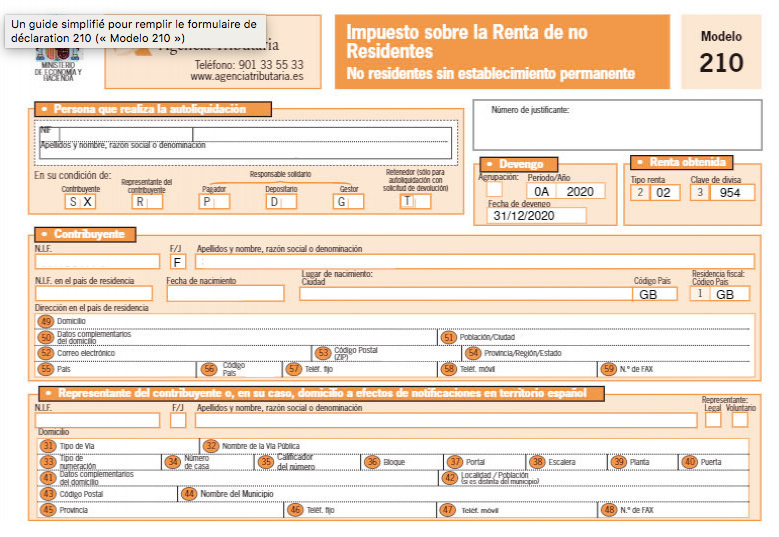
To remember:
- Renta imputada is due even if the property is not rented.
- In the case of partial rentals, renta imputada is prorated to the number of days the property was not rented.
- No discounts or deductions are allowed.
Sources
Agencia Tributaria
FAQ — Imputed Income in Spain
What is imputed income in Spain?
Imputed income is a notional property income imposed by the Spanish tax authorities on owners of vacant properties. The government considers that the mere fact of owning a property generates an economic benefit, even if it does not produce rental income.
Who is responsible for paying the imputed income tax in Spain?
The imputed income tax primarily applies to non-resident property owners who own real estate in Spain that is used as a second home or left vacant.
Do you have to pay imputed rent even if the property isn't rented out?
Yes. Even if the property does not generate any rental income, the Spanish tax authorities impose a notional income based on ownership of the property.
Does imputed income apply to second homes?
Yes. Second homes and properties used only occasionally by their owners are generally subject to imputed rent.
How is imputed income calculated in Spain?
The imputed income is calculated based on the property’s assessed value, known as the “valor catastral,” which serves as the basis for several property taxes in Spain.
What percentage is used to calculate the imputed income?
The taxable base is generally a percentage of the property’s assessed value, which is then subject to the tax rate applicable to non-residents.
What is the tax rate on imputed income?
The tax rate depends on the owner’s tax residency. Residents of the European Union are taxed at a lower rate than non-EU residents.
Does imputed income apply if the property is rented out?
If the property is rented out year-round, the imputed income does not apply. However, if the property is rented out only part of the year, the imputed income is calculated for the periods when it is not rented out.
Does imputed income apply to garages and outbuildings?
Yes. Garages, basements, or outbuildings attached to a property may also be subject to imputed income.
Do you have to report imputed income every year?
Yes. Non-resident property owners must report the imputed rental income each year on their tax return in Spain.
Which tax return should I use for imputed income?
Imputed income is generally reported on the tax return for non-residents who own real estate in Spain.
When should imputed income be reported?
Tax returns are generally filed in the year following the tax year to which the tax relates.
Can expenses be deducted from the imputed income?
No. Unlike rental income, expenses related to real estate are generally not deductible when calculating imputed income.
How do you calculate the imputed rental income for a property purchased during the year?
The calculation is made on a pro rata basis based on the number of days the owner held the property during the year.
How do you calculate the imputed rental income if the property is rented out for part of the year?
Imputed income is calculated only for periods during which the property is not rented.
Does imputed income apply to properties under construction?
No. Properties under construction or that are not habitable are generally not subject to imputed rent.
What happens if several people own the property?
Each co-owner must report their share of the allocated income based on their percentage of ownership.
Does the imputed rental income apply to all real estate in Spain?
It primarily concerns urban real estate held for personal use or left vacant.
Is the imputed income a local tax?
No. This is a national tax related to the taxation of non-residents’ real estate income.
What are the consequences if imputed income is not reported?
Failure to file a return may result in penalties, late payment interest, and tax penalties.