
- This practical guide complements our guide to "Selling your property in Spain"and details an often overlooked aspect: the energy performance certificate (EPC).
What is the EEC certificate?
Do you own a property in Spain that you are considering selling? Before discussing returns or capital gains, there is one essential step: the energy performance certificate (EPC). Without a valid EPC, the sale cannot be completed securely and the paperwork will be held up at the notary's office.
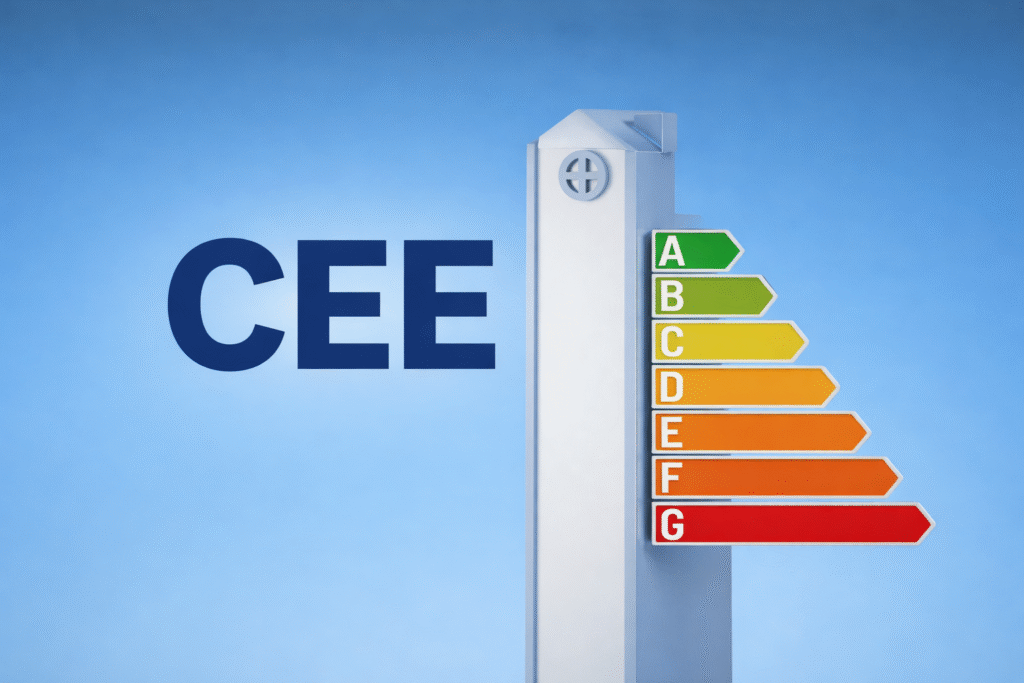
The Certificado de Eficiencia Energética (CEE) is an official document that classifies a property from A to G according to its energy performance (consumption and CO₂ emissions) and is mandatory for any sale or rental in Spain. It is governed by Royal Decree 235/2013.
The CEE is carried out by a certified technician after visiting the property and is then registered with the competent body of the autonomous community before the property is put up for sale.
Terreta Spain's advice: A good EPC is not just a box to tick: in large Spanish cities (Valencia, Madrid, etc.), a better energy rating can make it easier to resell and reassure investor buyers who compare the costs and overall performance of the property.
Is the EPC mandatory for selling a property in Spain?
In Spain, you cannot legally sell a property without a valid energy certificate: it must exist, be up to date, and its class must be included in commercial advertisements.
If there is no EEC (or if the certificate has expired), the sale may be blocked by the notary and the seller may face fines ranging from a few hundred to several thousand euros.
How long is the EEC valid in Spain?
An energy certificate is generally valid for 10 years, except in special cases where a shorter period is set for certain energy-intensive classes: 5 years for class G.
- Beyond this period, it must be renewed before any new sale or rental.
How much does an energy certificate cost in Spain?
The price is not set at the national level and depends on:
- From the surface of the property,
- Type of accommodation,
- From the region and the technician's fees.
In practice, for a standard apartment, you should generally expect to pay around €100 to €150 including tax (approximately €1.50/m²), to which small registration fees may be added.
How does the visit to establish the EWC take place?
The technician visits the property to analyze the insulation, windows, heating and air conditioning system, hot water production, orientation, etc.
All this data is entered into official software that calculates the estimated energy consumption of the home and assigns it a final energy rating (from A to G).
Why does Terreta Spain manage the EWC for you when you sell your property in Spain?
- So that your property is ready to sell from day one, without any administrative delays.
- To secure your added value: no last-minute surprises that scare away a good buyer.
- So you can focus on what matters most: managing your assets and preparing for your next investment.
Would you like to sell your apartment or house in Spain? Contact your Terreta Spain expert.
| The right investor reflex Terreta SpainBefore putting a property up for sale, we systematically check:Valid EECComplete file (simple note, IBI, community)Potential impact of minor energy-related work on the value and attractiveness of the property. |
FAQ – Energy Efficiency Certificate (CEE) in Spain
Is the EEC really mandatory when selling property in Spain?
Yes. Since Royal Decree 235/2013, all properties put up for sale must have a valid energy certificate, which must be given to the buyer and mentioned in the advertisements.
Can you sign at the notary's office without an energy certificate?
In practice, no: the certificate must be available and valid at the time of signing the deed of sale, otherwise the sale may be blocked and the seller held liable.
What are the risks of selling without an EEC or with an expired certificate?
The owner may be subject to administrative fines, particularly if the property is marketed without displaying the energy rating or if the certificate is not provided to the buyer.
How long is an EEC valid for?
The standard duration is 10 years from the date of issue (5 years for class G), provided that no major changes to the property have affected its energy performance.
Is it necessary to redo the EWC after construction work?
It is not always mandatory, but strongly recommended: in the event of energy-efficient renovations (windows, insulation, heating, air conditioning), a new certificate can improve the rating and increase the value of the property for sale.
How much does an energy certificate cost in Spain?
Depending on the region, size, and complexity of the property, the fee is often around €100 to €150 for standard housing, plus any registration fees.
Who can issue an EEC?
Only technicians, architects, or engineers who are authorized and registered with regional authorities can issue and register an energy certificate.
When should you request the EEC in a sale project?
Ideally before the ad is posted online, to comply with the law and avoid having to do it urgently just before signing at the notary's office.
Can Terreta Spain take care of everything?
Yes. Terreta Spain coordinates the completion or renewal of the EPC, verifies the registration, adds it to the sales file, and ensures that your property is 100% compliant with legal requirements when you sell it in Spain.