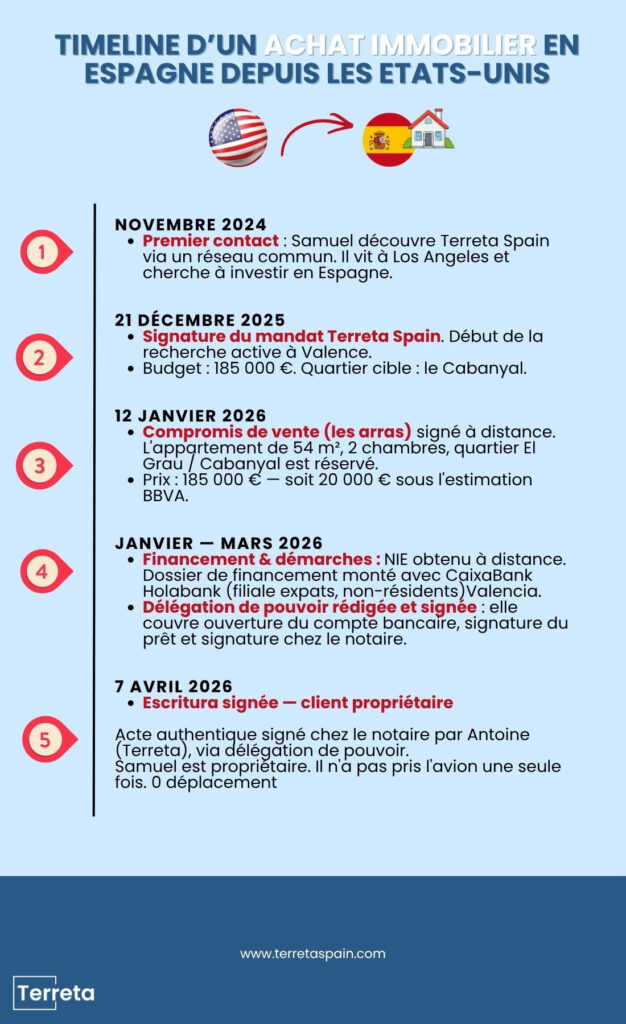

Financing, NIE, notary, bank account: everything you need to know about buying a home remotely. Featuring the real-life story of Samuel, a Frenchman living in Los Angeles who has owned a home in Valencia since April 7, 2026.
By the Terreta Spain team · April 2026 · 8-minute read
Introduction
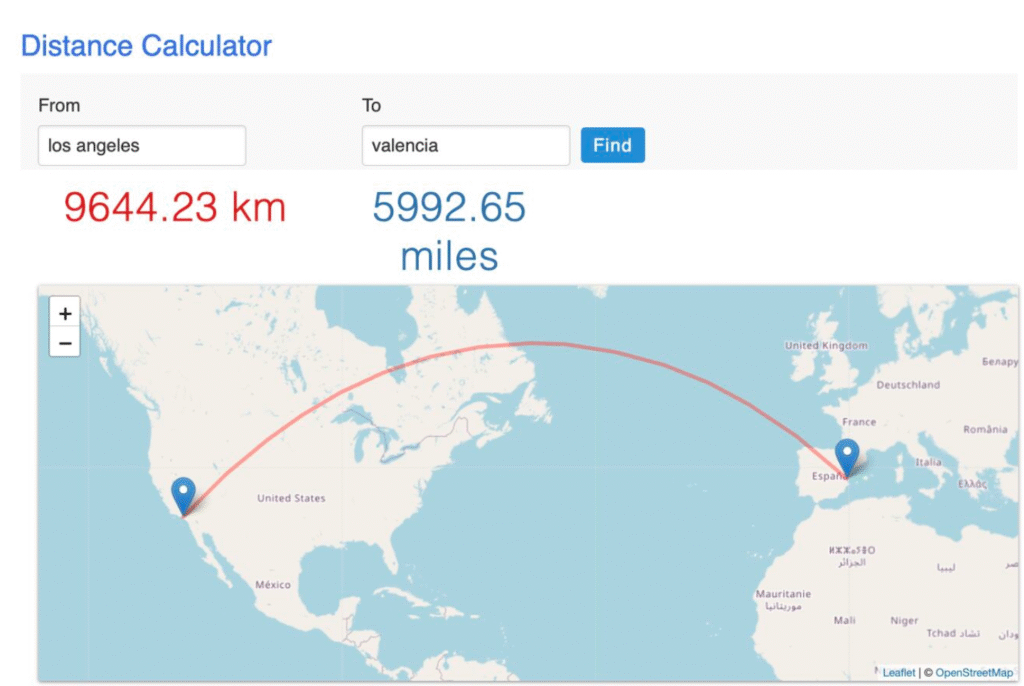
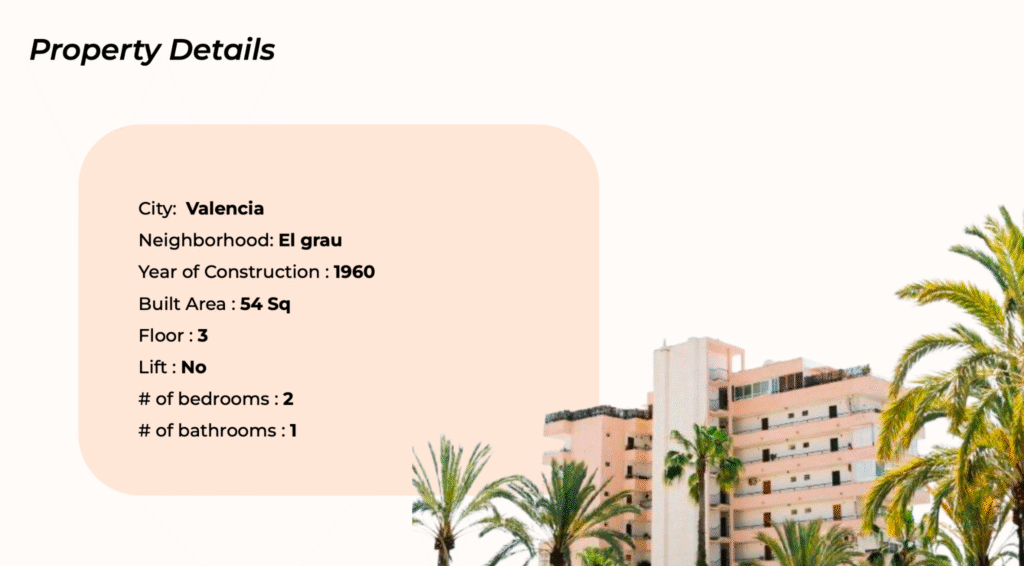
On the morning of April 7, 2026, Samuel woke up in Los Angeles as the owner of an apartment in Valencia, Spain. A two-bedroom apartment in the Cabanyal neighborhood, just steps from the beach, for €185,000. The best part? He didn’t set foot on a plane even once.
Like him, thousands ofpotential buyers living in the United States see Spain as an obvious choice—whether to invest their savings or simply to have a pied-à-terre on the Old Continent. And here’s a spoiler: the barrier isn’t legal; it’s mental: “It must be complicatedto buy property remotely from the U.S.” Not at all.
This guide answers all the questions Samuel had—and the ones you’re probably asking yourself.
Is it legal to make purchases in Spain from the United States?
Yes, without restriction. Spain imposes no limits on property purchases by non-residents, regardless of their nationality or country of residence. An American, a French citizen, or an Italian living in Los Angeles, New York, or Houston can freely purchase an apartment, a house, or commercial property in Spain.
The only requirements are administrative in nature:
- Obtaining an NIE (Número de Identificación de Extranjero, the Spanish tax identification number)
- Have a Spanish bank account.
Both of these processes can be completed entirely online.
Delegation of authority: the key to remote purchasing
This is the legal tool that makes it all possible. A power of attorney (in Spanish: poder notarial) is a notarized document through which you authorize a trusted individual—such as your agent or attorney—to act on your behalf in Spain.
Specifically, Samuel’s delegation of authority covered three actions:
- Opening a Spanish bank account, which is essential for receiving the loan and paying the notary
- Signing the loan agreement at the bank
- Signing the deed (escritura) at the notary's office
Without this power of attorney, each of these transactions would have required his physical presence in Spain. With it, Antoine (one of the founders of Terreta Spain) signed everything on his own, and on April 7, 2026, Samuel woke up to find himself a homeowner on the other side of the world.
Terreta’s advice: A power of attorney must be drafted carefully. It must explicitly list each authorized action; a power of attorney that is too vague may be rejected by a notary or a bank. This is one of the first things we do with our clients remotely.
How to Apply for an NIE (or TIE) from the United States
The NIE: Your Key to Buying Property in Spain
The NIE (Foreigners' Identification Number) is required for any real estate purchase in Spain. Without an NIE, you cannot sign any documents at the notary's office, open a Spanish bank account, or pay local taxes. The process takes a few weeks and can be handled by a lawyer through a power of attorney.
Practical information: From the United States, there are two possible routes:
- Submit the EX-15 form and proof of the purpose of the purchase (a preliminary sales agreement or a letter of intent to purchase is sufficient) to the Spanish Consulate (in Los Angeles, New York, Miami, Chicago, Houston, or San Francisco); the usual processing time is 2 to 6 weeks.
- Authorize a Spanish attorney (or your Terreta Spain agent) through a notarized and apostilled power of attorney.
The TIE: required to settle there if you are not an EU citizen
If you plan to live in Spain for more than six months a year, a second document comes into play: the TIE (Tarjeta de Identidad de Extranjero, or Foreigner’s Identity Card). Although little known, it is essential for non-EU nationals who are settling permanently in Spain, including, since Brexit, British citizens.
Practical information: The TIE contains your personal information, your photo, your fingerprints, and your NIE number. It is valid for 5 years. To obtain it, you must have a valid NIE, make an appointment with the National Police or a consulate, fill out form EX-17 (or EX-23 for British citizens), and pay a fee of €12 to €15 using Form 790, code 012. The application must be submitted within 30 days of arriving in Spain. Remember to have your documents translated by a certified translator.
In short: You need a NIE to buy property. You need a TIE if you become a resident and are not an EU citizen.
Can you get a mortgage in Spain with income in dollars?
Funding from the United States: It’s possible
This is often the biggest sticking point. “My bank is American, and my income is in dollars—will a Spanish bank provide me with financing?” The answer is yes.
Spanish banks provide financing to non-residents, including those living outside the European Union. Samuel is a prime example: as a U.S. tax resident with income in dollars, he secured financing from CaixaBank Holabank (the branch for expatriates and non-residents) in Valencia.
Requirements for non-U.S. residents:
- Maximum loan-to-value ratio: 70% of the property's value (compared to 80% for Spanish residents)
- Term: up to 20 years
- Rate: Samuel secured a fixed rate of 2.15% with discounts (home insurance, etc.), and approximately 3% without discounts
- Required documents: bank statements for the past 12 months, proof of income, U.S. tax return (Form 1040), proof of address
Please note: A key consideration for U.S. residents is that income in U.S. dollars and the lack of a French tax return can complicate the assessment. Some banks are more receptive than others to international clients. We work with banking contacts who specialize in non-resident clients, which is a key component of Terreta Spain’s support services.
Purchasing Costs You Need to Know
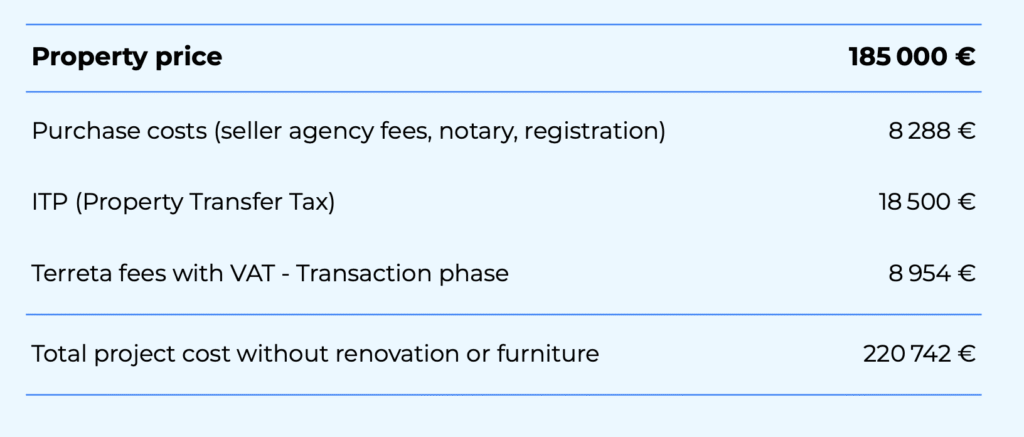
In addition to the purchase price, you need to factor in the closing costs. For Samuel’s apartment (€185,000):
| Job | Amount |
| Property price | 185 000 € |
| ITP (property transfer tax, 10% in the Valencian Community) | 18 500 € |
| Notary fees, registry fees, seller's agent fees | 8 288 € |
| Terreta Fees (including tax) | 8 954 € |
| Total project cost, excluding renovation | 220 742 € |
The ITP (Impuesto de Transmisiones Patrimoniales) is the equivalent of French notary fees. The rate varies by autonomous community: 10% in the Valencian Community and 6% in Madrid, for example. For more information, read our guide on the ITP.
Taxation for U.S. residents who own property in Spain
This is a point that is often overlooked. Even if you remain a U.S. tax resident, owning property in Spain creates tax obligations in both countries.
In Spain, any non-resident who owns real estate is subject to IRNR, the Impuesto sobre la Renta de No Residentes and taxed at a rate of 24% (on the gross rental income generated by the property) for non-EU residents such as Americans.
This applies even if the property remains vacant all year round: in that case, the flat-rate tax is calculated based on a theoretical rental value (generally 1.1% or 2% of the assessed value). This is the renta imputada.
In the United States, you will need to report this property and the income it generates on your U.S. tax return. The tax treaty between the United States and Spain prevents double taxation (signed in 1990), but it does not eliminate your reporting obligations.
Taxes: What if you decide to move to Spain one day?
Many French people living in the United States view Spain not only as an investment, but also as a way out—a chance to return to Europe in 5 or 10 years, slow down, and enjoy life. If this scenario sounds like you, here’s what you need to plan for now.
As soon as you spend more than 183 days a year in Spain, you become a Spanish tax resident. Spain then claims the right to tax your worldwide income, including wages, dividends, pensions, capital gains, and U.S. rental income. The tax treaty between the United States and Spain (1990) prevents double taxation, but it does not eliminate reporting obligations on either side.
The Beckham Law — What You Need to Know If You Have a High Income
This optional scheme allows new Spanish residents to be taxed at a flat rate of 24% for six years on their income from Spanish sources, instead of the progressive Spanish tax scale, which can reach up to 47%. It applies under strict conditions, including not having been a Spanish tax resident in the previous five years. For someone like Samuel, who manages bakeries in California and earns a significant income, the tax implications warrant a thorough simulation before moving to Spain.
Capital gains on resale: timing is everything
If you sell your Spanish property as a U.S. non-resident, the capital gain is taxed at 24% in Spain. If you sell it as a Spanish resident, it falls under the Spanish savings tax bracket (base del ahorro): from 19% to 30% depending on the amount. Depending on your situation, one or the other may be more advantageous, and the timing of your change in tax residency can make a significant difference.
In the United States, the obligations don't stop
The United States taxes its citizens and permanent residents on their worldwide income, regardless of where they live. Even if you are a Spanish tax resident, you must continue to report your income to the United States using Form 1040. The U.S.-Spain tax treaty provides mechanisms to avoid double taxation—but the administrative complexity is real. A tax expert familiar with both systems is essential for this type of transition.
💡 Terreta Spain’s advice: If you’re planning to move to Spain in the medium term, conducting a prospective tax analysis before purchasing a property allows you to optimize your investment structure from the outset and avoid unpleasant surprises when you eventually sell or change your place of residence. We work with bilingual French-Spanish tax firms to assist with these types of cases.
What Terreta Spain does for you
What allowed Samuel to never have to travel was the complete delegation of all operational tasks to Terreta Spain:
- Search for a property based on your criteria
- Price negotiation (€185,000 for a property valued at €205,000 by BBVA)
- Preparation and tracking of the funding application
- Drafting and signing of the power of attorney
- Obtaining a NIE
- Opening a Spanish bank account
- Coordination with the notary
- Signing of the notarized deed by proxy
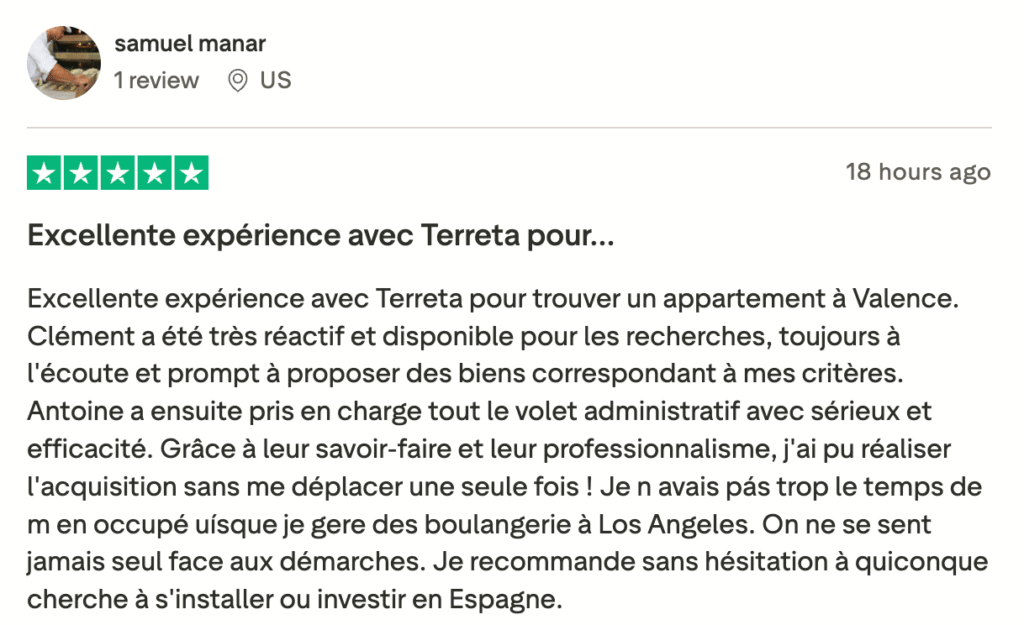
Samuel sums it up in his Trustpilot review: “I was able to complete the purchase from Los Angeles without having to travel a single time! You never feel alone when going through the process.”
To learn more, check out our resources:
- Foreign Identification Number
- NIE, TIE, and Certificate of Residence: An Administrative Guide for Foreigners in Spain
- Mortgages in Spain
- The steps involved in buying property in Spain
- How do you set up a power of attorney in Spain?
- Costs associated with buying property in Spain
- Capital gains and plusvalía in Spain
- Rental Taxation in Spain
Frequently Asked Questions
Do you have to be a French citizen to buy property in Spain through Terreta Spain?
No. We assist anyone looking to buy property in Spain, regardless of their nationality. Our clients include French, Belgian, Swiss, American, British, Dutch, and others.
Can you use U.S. dollars to make purchases in Spain?
The purchase is made in euros. If your funds are in dollars, you will need to exchange them. Regarding financing, some Spanish banks accept income in dollars, subject to a case-by-case review.
How long does an online purchase take?
For Samuel: 3.5 months from the initial serious contact (search mandate) to the signing of the deed. This is a realistic timeframe for a well-prepared case with financing in place.
What are the tax implications for a U.S. resident who purchases real estate in Spain?
Several levels of taxation come into play. In Spain, all non-EU non-residents are subject to the IRNR tax at a rate of 24% on rental income if the property is rented out, or on a theoretical basis (the “renta imputada”) if it remains vacant. Local property tax (IBI) is due annually. In the United States, you must report this property and its income on your U.S. tax return; U.S. citizens and permanent residents are taxed on their worldwide income, regardless of where they live. The 1990 U.S.-Spain tax treaty prevents double taxation but does not eliminate reporting obligations. If you become a Spanish resident at some point, the Ley Beckham may be advantageous depending on your income level, and the timing of the resale will have a direct impact on capital gains taxation. This matter warrants a personalized tax assessment before any decision is made.
What is the best city to buy property in Spain from the United States?
It depends on your goals. Valencia offers excellent value for money and strong rental demand. Madrid is more expensive to buy, but ideal for capital appreciation. Barcelona is attractive but subject to stricter regulations. Terreta Spain provides support in all these areas.
This article is for informational purposes only. It does not constitute personalized tax or legal advice. Since every situation is different, we recommend that you consult a professional before making any decisions.
Do you live in the United States and are thinking about buying property in Spain?