Valencia is the third largest city in Spain and is currently experiencing a boom since COVID-19. Its quality of life, Mediterranean climate, natural and cultural heritage, and real estate have made it the number one destination on the east coast. Our local experts will take you to discover its most emblematic districts.
| District | Price m2 Sep 2025 | Rent m2 Sep 2025 | Rentabilidad bruta |
|---|---|---|---|
| Rascanya | 2 190 € | 14,0 € | 7,7% |
| L'Olivereta | 2 458 € | 14,3 € | 7,0% |
| Benicalap | 2 491 € | 14,7 € | 7,1% |
| Patraix | 2 667 € | 13,3 € | 6,0% |
| Jesús | 2 775 € | 13,4 € | 5,8% |
| Benimaclet | 2 940 € | 13,3 € | 5,4% |
| Poblats Marítims | 2 997 € | 16,5 € | 6,6% |
| València (average) | 3 227 € | 15,4 € | 5,7% |
| Quatre Carreres | 3 249 € | 15,3 € | 5,7% |
| Algirós | 3 307 € | 13,7 € | 5,0% |
| Camins al Grau | 3 403 € | 15,4 € | 5,4% |
| Campanar | 3 408 € | 15,3 € | 5,4% |
| Extramurs | 3 572 € | 15,6 € | 5,2% |
| El Pla del Real | 4 073 € | 14,9 € | 4,4% |
| Ciutat Vella | 4 536 € | 19,2 € | 5,1% |
| L'Eixample | 4 895 € | 18,1 € | 4,4% |
The historic districts: charm and culture
Ciutat Vella
The city has just under 19 districts and 90 neighborhoods. Among them is Ciutat Vella, the historic heart of Valencia, bordered by a medieval wall, the remains of which can be seen from the Quart and Serranos towers.
“The Old City” in Valencian, is home to 6 very different areas: El Carmen with its narrow streets, El Pilar, la Xerea, San Francesc, La Seu and El Mercat, where the city's largest market has been located since the 1920s.
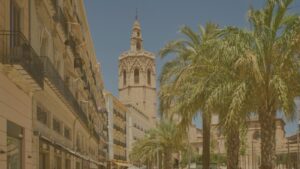
Under the gaze of Valencia's magnificent cathedral, Ciutat Vella combines Gothic, Baroque and Modernist architecture, committed street art, local craft shops and an increasing number of bicycle rental shops, due to tourism.

Must-see:
– The Cathedral and the Micalet, its bell tower, a symbol of the city's historic center
– La Lonja de la Seda (Silk Exchange)
– The Central Market
– The Torres de Serranos
– Institut Valencià d’Art Modern (IVAM)
– Street art in the alleys
– The portal de Valldigna, a vaulted porch that served as the entrance to the Muslim quarter in the 15th century
Average price: €3,875/m²
The upscale districts: modernity and elegance
L’Eixample
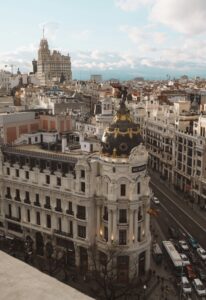
Valencia's Eixample follows the codes of the district of the same name in Barcelona: Haussmannian style, buildings with character, and space.
Built in the 19th century, this is an upscale district, structured around vast avenues, with elegant modern architecture, high-end boutiques and upscale restaurants.
The Eixample is made up of the Gran Via residential area, Pla del Remei and Ruzafa, which we will come back to.

Must-see:
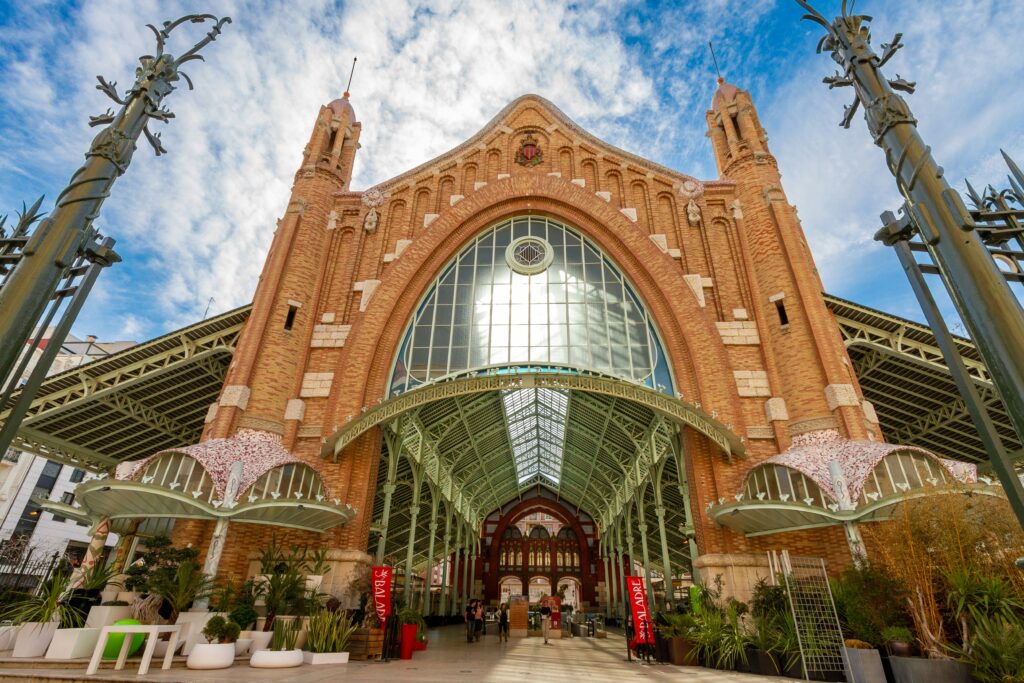
– The Colón Market, housed in a brick and iron structure since 1916
– Calle Colón, ideal for shopping afternoons
– The bullfighting museum, located in an arena that still welcomes the public
– The stately buildings of Pla del Remei, which reflect the city's prosperity at the beginning of the 20th century
Average price: €4150/m²
El Pla del Real
El Pla del Real is an upscale residential neighborhood highly regarded for its tranquility and, above all, its immediate proximity to the Turia and Viveros Gardens. The Turia is one of the largest urban natural parks in Europe. It crosses the city of Valencia for over 9 kilometers, in the former dried-up bed of the Turia River, responsible for the devastating flood of 1957.
El Pla del Real is home to the university district and the famous Mestalla football stadium, which is the pride of the city.
Until the 19th century, the Royal Palace was located there, destroyed during the War of Independence.

Must-see:
– Palau de la Música, overlooking the Turia
– Turia Gardens
– Viveros Gardens
Average price: €3,300/m²
Trendy neighborhoods
Ruzafa
Ruzafa (Russaffa in Valencian) is part of the Eixample, but it deserves a special mention. This former working-class district with colorful facades has become the vibrant heart of Valencian nightlife. The countless shops, terraces, cocktail bars, and karaoke venues come alive at nightfall and remain busy until the early hours. Ruzafa is also the epicenter of vintage fashion in the city, bridging tradition and modernity.

Must-see:
– Ruzafa Market
– Trendy bars and restaurants
– El Parque Central, one of the green lungs of the city
– Independent art galleries
Average price: €3,730/m²
El Cabanyal
The neighborhood undergoing a renaissance in Valencia is El Cabanyal. A former fishing district with charming colorful houses covered in Valencian ceramics, it is being revived by expatriates drawn to its proximity to the beach, its authenticity, and its unique architecture. Trendy cafes and cutting-edge restaurants have been popping up like mushrooms in recent years.
In El Cabanyal, one feels like being in the streets of Havana, Cuba. The pace is slow, there is a scent of summer in the air all year round, the streets are bathed in sunshine, laundry hangs from the windows, and the immense beaches are open to passersby.

Must-see:
– Traditional colorful houses
– Malvarrosa Beach
– Cabanyal Market
Average price: €2,800/m²
Family-friendly neighborhoods
La Saïdia
The advantage of the Saïdia district is that it borders the Turia, near Ciutat Vella. In other words, the district is located a 10-minute walk from the heart of the city of Valencia, but it is much quieter and more residential, perfect for a balanced family life. It is becoming a reference for expatriates who settle there with their children.

Must-do or see:
– A walk in the neighboring Turia.
– The Fine Arts Museum, a few minutes' walk away. A reference for painting in Spain. It contains paintings by Velázquez, El Greco, Pieter Brueghel and Joaquin Sorolla, the emblematic painter of Valencia.
Average price: €2,730/m²
Patraix
Patraix is derived from the Latin word meaning "stone". Locals consider it one of the best neighborhoods in the city because it has preserved its village soul. Life there is like it used to be, among themselves, with a very strong community spirit. It is perfectly accessible from the center, very open, but preserved, away from the hustle and bustle.

Must-do or see:
- Drink coffee on the Plaza de Patraix.
Average price: €2,330/m²
The modern district of Valencia
Ciudad de las Artes
Ciudad de las Artes is the district that best symbolizes the modernity of the city of Valencia. Located in the Quatre Carrerres district, a large residential area that extends to the industrial port, in the south of the city, it was structured late, in the 90s, around the project of this monumental City of Arts and Sciences in a neo-futuristic style. Emerging from the Turia riverbed in 1998, it was designed by Santiago Calatrava, a native of the city.
Must-see:
– L'Oceanogràfic
– L'Hemisfèric
– The Palau de les Arts Reina Sofía
– The Príncipe Felipe Science Museum
– L'Umbracle, a promenade of palm trees that shelters native plant species and is covered by a series of 55 arches.
Average price: €3,000/m²
The more peripheral districts
Benimaclet
Benimaclet is an old village that has been absorbed by the capital. Today, it still retains its small town spirit. Close to the city center, affordable, dynamic, it is popular with students who can easily find accommodation there.

Must-see:
– Benimaclet Square
– Local bars and restaurants
– Urban gardens
Average price: €2,700/m²
El Saler
Located south of Valencia, in the Pobles del Sur district, El Saler is appreciated for its preserved beaches and its natural park, l’Albufera. Rice fields, protected bird species, etc. This urban oasis is ideal for nature lovers.
Boat trips at sunset are very popular with families and tourists, the restaurants serve paellas and typical dishes at any time, such as all-i-pebre, an eel stew with paprika and chili. No one has described l’Albufera like Blasco Ibáñez in his pages.

Must-see:
– Natural beaches
– Albufera Natural Park
– Mediterranean pine forest
Average price: €2,800/m²
FAQ: The Valencia Neighborhood Guide
Which is the most historic neighborhood in Valencia?
Ciutat Vella is the historic heart of Valencia, bringing together the main monuments and tourist sites.
Where can you find the best shops in Valencia?
L’Eixample, especially Calle Colón, is the ideal district for high-end shopping.
Which district is the trendiest in Valencia?
Ruzafa is considered the hipster district of Valencia, with its trendy bars, cafes and art galleries.
Where can you enjoy the beach in Valencia?
El Cabanyal offers direct access to Malvarrosa beach, while El Saler offers more natural beaches.
Which district is ideal for families living in Valencia?
El Pla del Real is popular with families for its calm and proximity to green spaces.
Which is the best neighborhood for students in Valencia?
Benimaclet is popular with students for its youthful atmosphere and affordable rents.
Where can you discover street art in Valencia?
El Carmen is a district known for its committed street art and artistic atmosphere.
Which district of Valencia offers the best nightlife?
Ruzafa is known for its cocktail bars and lively nightlife.
Where can you discover nature around Valencia?
El Saler, with its Albufera Natural Park, offers a beautiful nature escape near the city.
Sources: Wikipedia, Google maps, Idealista